
Thread Matters: What Every Quilter (and Sewist) Needs to Know

When most people start a quilt, they focus on fabric—the colors, the prints, the thrill of creating.
But there’s something just as important that can completely change your results: thread.
The right thread makes your seams flatter, your quilting smoother, and your finished quilt look professional. The wrong thread? Lint, tension problems, broken stitches, and bulky seams.
Let’s dive into everything you need to know to choose thread like a pro.
Understanding Thread Weight
Here’s the rule that confuses many beginners:
The higher the number, the thinner the thread.
100 wt → very fine
80 wt → fine
60 wt → fine
50 wt → your everyday go-to
40 wt → thicker, more visible
How Thread Weight Is Measured
Thread weight is a length measurement and is determined by measuring one gram of thread. For example, if the length of one gram of thread is 30 meters long, then that thread’s weight is 30.
Finer thread → more length → higher number
Thicker thread → less length → lower number
Once you understand this, choosing thread makes a lot more sense.

Thread spools and cones will have the thread weight on it.
Types of Thread: What’s the Difference?
Cotton Thread
Natural fiber, soft, matte finish
Creates more lint in your machine
Can disintegrate faster over time
Polyester Thread
Strong, durable, slightly shiny
Low lint → easy on your machine
Holds up better over time
My go-to quilting thread: So Fine! by Superior Threads (50 wt polyester)
Runs smoothly, low lint, professional finish.
Rayon Thread
Soft, shiny, beautiful for decorative stitching
Less stable → breaks down faster in moisture
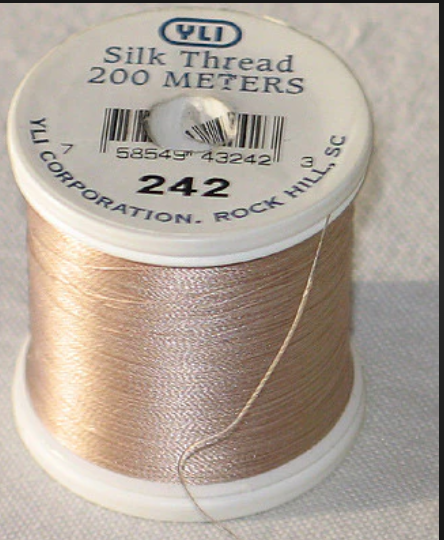
Silk Thread
Fine, strong, smooth
Glides through fabric
Perfect for delicate work and appliqué.
Needle + Thread: They Work Together
Many quilters don’t realize this:
Change your needle when you change your thread.
Thicker thread → larger needle (denim/jeans)
Fine thread (60–100 wt) → microtex/sharp needle
Mismatch = tension problems, skipped stitches, or broken thread.
Piecing Thread: Where Accuracy Matters
Thread choice directly affects the accuracy of your quilt blocks.
Best for piecing: 50 wt cotton or polyester, or 60 wt for even flatter seams.
Fine thread = flatter seams = cleaner points.
Match Your Thread to Fabric
This is crucial, especially for quilt show entries:
White fabric → white thread
Black fabric → black thread
Red fabric → red thread
Judges notice stitches that blend; mismatched thread can hurt your score.
Bobbin Thread Trick for Flatter Seams
Favorite tip for piecing:
Use DecoBob (80 wt) by WonderFil Specialty Threads in the bobbin
Use regular 50 wt on top
Press seams toward the darker side
Result: flatter seams with no humpy ridges!

Quilting Thread: Blend or Stand Out
Thread is part of your design when quilting.
Blend → match thread to fabric
Stand out → bright or contrasting color
Pop → use a color opposite on the color wheel
My Go-To for Longarm Quilting
So Fine! by Superior Threads (50 wt polyester) → blends beautifully, low lint, smooth
Glide (40 wt) by Fil-Tec → slightly thicker, shinier, shows off quilting designs
Even though Glide is great, I usually stick with So Fine!—my machine loves it, and it gives consistent results.

English Paper Piecing
For EPP, you want something fine and nearly invisible:
Invisafil by WonderFil Specialty Threads 100 wt (very fine) → fine, disappears into seams, gives crisp points.
The celery green color is a good color choice because it blends with a lot of colors.

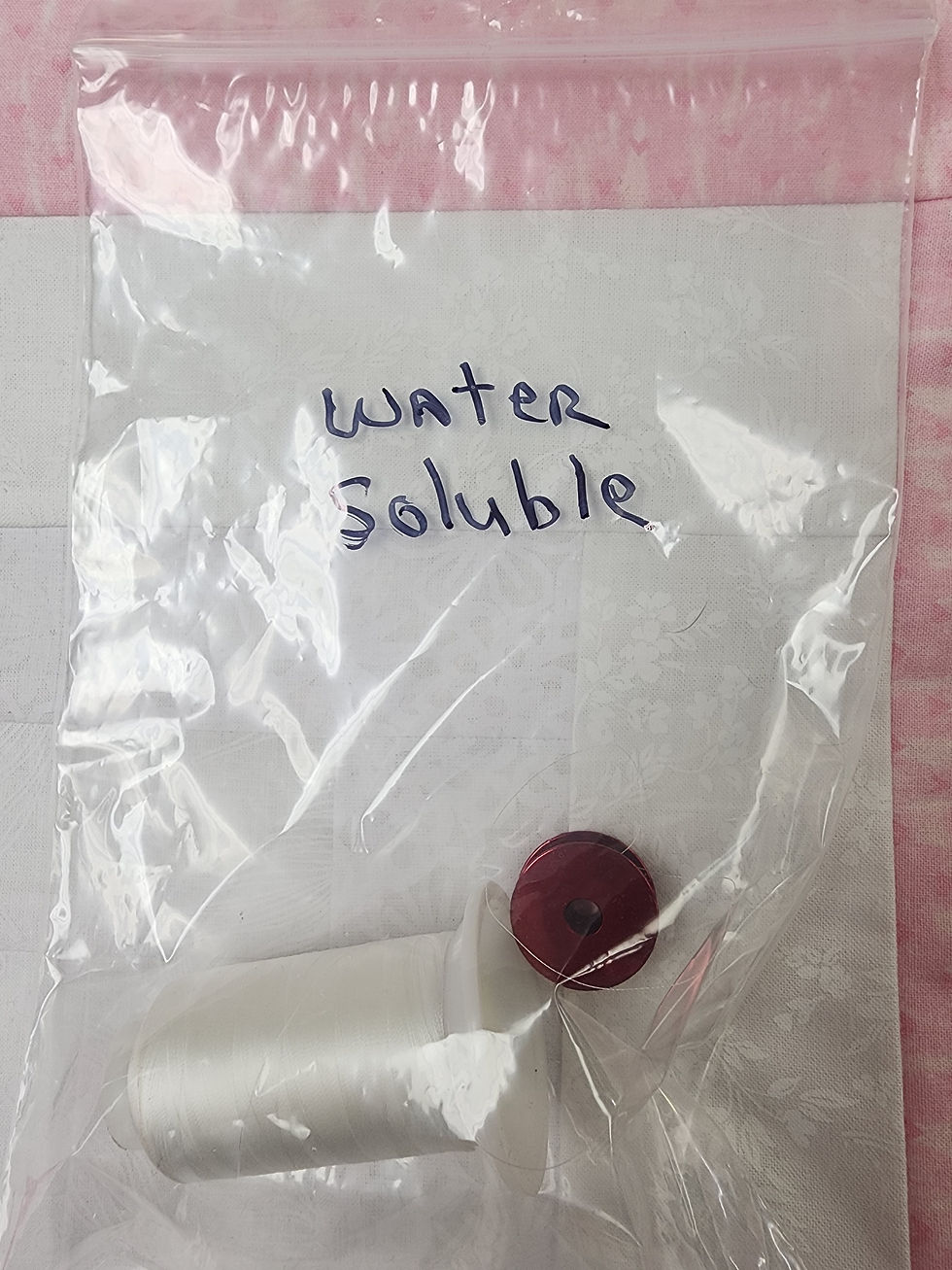
Water-Soluble Thread: Time-Saving Magic
Water-soluble thread can be a game changer:
Use to baste your quilt
Quilt and bind
Wash → the basting stitches disappear
Storage Tip
Store in a zip-lock bag
Humidity can dissolve it before use
Bonus Uses:
Trapunto quilting → baste extra batting layers, quilt over them, wash away
Creating appliqué pieces → temporary stitching
(I’ll dive deeper into appliqué techniques in another post!)
Using the Right Thread for the Right Job
Not all threads are meant for every purpose—using the wrong one causes headaches.
Serger Thread
Great for serging, NOT for piecing or quilting
Thinner, weaker, designed for decorative finishing
Can lead to weak seams
Embroidery Thread
Use only for embroidery
Not ideal for seams or quilting tension
Can cause puckering or breakage
Thread Painting / Decorative Work
Specialty threads like Glide or Isacord polyester
Beautiful sheen, great for decorative stitching
Bottom line: use the correct thread for the correct job
Final Thoughts
Thread is more than a tool—it shapes your quilting:
Affects accuracy, finish, and durability
Impacts your machine performance
Can make your quilt look professional—or amateur
Next time you start a project:
Choose your thread with intention.


This is great, Sheila! Wish I could print it out.